This Week in Metro Atlanta: Cobb Votes Tuesday on Backyard Houses, and Five Points Slips Toward 2031
Cobb commissioners vote Tuesday night on a code change that would let homeowners in single-family neighborhoods put a second small house in the backyard, and on new size and cooling limits for data centers. MARTA's chief told city council the $230 million Five Points rebuild is facing a roughly $40 million budget jump, with the contractor now looking at May 2031. And 793 student beds broke ground in the West End.

Three things landed in the last several days that change a number somebody around here is about to act on. The first one happens tomorrow night, and if you own a house in unincorporated Cobb County it is the most consequential vote on your property rights in two years.
Cobb's Board of Commissioners holds its second and final public hearing on this year's code amendments on Tuesday, October 27, at 7 p.m. at the David Hankerson Building, 100 Cherokee Street in Marietta, and votes the same night. Twelve chapters are in the package; the one that matters to a homeowner is Chapter 134, the zoning code, and the provision that would allow accessory dwelling units in single-family residential districts. The county's own draft caps the ADU at 50 percent of the main house's gross square footage or 850 square feet, whichever is smaller; one story, no taller than the main house; the owner has to live in either the main house or the ADU; at least one off-street parking space; and no short-term rentals. East Cobb News reports the draft also requires it to run off the main building's utility meter. Normal setbacks and impervious-surface limits still apply.
The part most people will miss is that this is not by-right. The draft puts ADUs under Sec. 134-37, the special land use permit section, which means every single one goes to the Board of Commissioners for approval, case by case, in public. So if it passes, nobody wakes up Wednesday able to pull a permit for a backyard cottage. What changes is that the door exists at all. The same section would also pull data centers into special-permit territory with real limits: a minimum of five acres and a maximum of 30, all power generated off-site except emergency backup, a closed-loop cooling system with no cooling water discharged into the county's wastewater system outside of routine maintenance, plus noise caps on cooling equipment and generators and restrictions on lighting and height.
Here is the history that tells you how to read tomorrow night. Cobb tried this in 2024. The Planning Commission rejected the ADU amendment 5-0, and a week later, on November 12, 2024, the Board of Commissioners voted 5-0 to withdraw it after a hearing where most speakers were against it. It was drafted then at Chairwoman Lisa Cupid's request. So the proposal in front of them tomorrow has already died once in that room, and I would not assume either outcome. If you own in unincorporated Cobb and have a basement, a garage or a flat half-acre out back, read the draft before the meeting. An 850-square-foot unit you can rent to a tenant or move a parent into is a second income line or a care plan attached to a house you already own, and because every one needs a permit from the board, the first dozen applications will set the tone for everybody who files after them.
Second, downtown. MARTA General Manager and CEO Jonathan Hunt told the Atlanta City Council's Transportation Committee this month that the Five Points Transformation is, in his words, going to have a large budget jump -- roughly $40 million, which he gave from memory and promised to firm up later. The project is budgeted at about $230 million, paid out of the More MARTA half-penny sales tax plus $13.8 million from the state and a $25 million federal RAISE grant. When the committee chair asked why the budget numbers were missing from MARTA's own slides, Hunt called it an oversight. Separately, Atlanta News First reported on October 5 that the contractor, Skanska, is now looking at a May 2031 finish instead of the 2029 date MARTA originally gave; MARTA's response was that the schedule has not been formally reviewed or approved by MARTA or the City of Atlanta.
Two numbers matter here more than the dollar figure. Roof deconstruction was about 60 percent complete on October 5, and that is phase one of five, with the deconstruction stage alone scheduled to run into summer 2027. And the Forsyth Street entrance, currently the only way into the station, closes in roughly a year, leaving the Peachtree Street entrance. If you have been looking at a condo, a storefront or a small building in the blocks around Five Points on the theory that the station reopens and the area re-rates, your hold period just got about two years longer and your construction-noise window about two years wider. That is not a reason to walk away from downtown. It is a reason to underwrite it as a 2031 story rather than a 2029 one, and to price the next few years of torn-up sidewalk into what you pay today rather than hoping a tenant absorbs it.
Third, the West End. Morehouse and Spelman broke ground on Thursday, October 15, on The Den at Eight50 West, a $147 million student housing building at 850 West End Avenue SW, immediately south of Morehouse's B.T. Harvey Stadium. It is 305 units and 793 beds, developed by Radnor Property Group with the Madrone Community Development Foundation and built by a Clark Construction and C.D. Moody Construction joint venture, with Moody Nolan as architect. Develop Fulton approved up to $144.5 million in bond financing for it back in January. Urbanize reports construction actually started in July, so the October event was the ceremony rather than the first shovel. It opens for the fall 2028 semester. Develop Fulton put the job count at about 350 during construction and 14 permanent. Mayor Andre Dickens framed the point plainly: a lot of those students are currently living off campus and walking city streets to get to class.
If you own a rental house near the Atlanta University Center, that last sentence is your business plan being rewritten. Spelman is separately building a 700-bed residence hall near The Oval, also set to open in 2028. Put the two together and roughly 1,500 beds that currently have to find somewhere to sleep get an on-campus option in the same semester. Student rentals in the West End, Vine City and the blocks off Lee Street have been a reliable trade for years precisely because the colleges did not have the beds. That does not make those houses bad assets -- the West End has demand that has nothing to do with enrollment, and a five-bedroom rented by the room is not the same product as a dorm. It does mean that if your underwriting assumes by-the-room student rent escalating every year through 2029, you are betting against a building that is already out of the ground. I would want to know whether that house works as a plain single-family rental, or as a resale to an owner-occupant at today's prices, well before 2028 rather than during it.
One concrete thing to do this week: if you own in unincorporated Cobb, pull up the Chapter 134 draft linked below and read Sec. 134-37, items 35 and 36. It is a few pages. Then look at Tuesday's agenda. Whichever way that vote goes, it is the only one of these three items where your showing up changes the outcome.
Sources
- 2026 Code Amendments, Official Code of Cobb County Part I, Chapter 134 (public hearing version) — Cobb County, Sept 2026
- Code amendments to be reviewed in October 2026 — Cobb County, Oct 21, 2026
- Proposed Housing and Neighborhood Code Updates - Explained — Cobb County, Oct 8, 2026
- Proposed Cobb code changes include ADUs and data centers — East Cobb News, Sept 8, 2026
- Cobb commissioners withdraw accessory dwelling unit proposal — East Cobb News, Nov 12, 2024
- MARTA chief says Five Points rebuild faces 'large budget jump' — Center for Civic Innovation, Oct 18, 2026
- A look inside MARTA's Five Points transformation — Atlanta News First, Oct 5, 2026
- At doorstep of Atlanta HBCUs, 'transformative' project full speed ahead — Urbanize Atlanta, Oct 22, 2026
- Atlanta leaders break ground on affordable student housing — Georgia Public Broadcasting, Oct 16, 2026

Metro Atlanta real estate · Licensed in Georgia & South Carolina · REAL Broker, LLC
Keep reading

Five Things Worth Doing This Halloween Weekend in Gwinnett and DeKalb
This week's two counties are Gwinnett and DeKalb: a free Dia de los Muertos festival in Norcross, trick-or-treating and a movie in Old Town Lilburn, sold-out-prone ghost tours in Lawrenceville, The Incredibles on Decatur Square, and the last three nights of Stone Mountain's Pumpkin Festival.
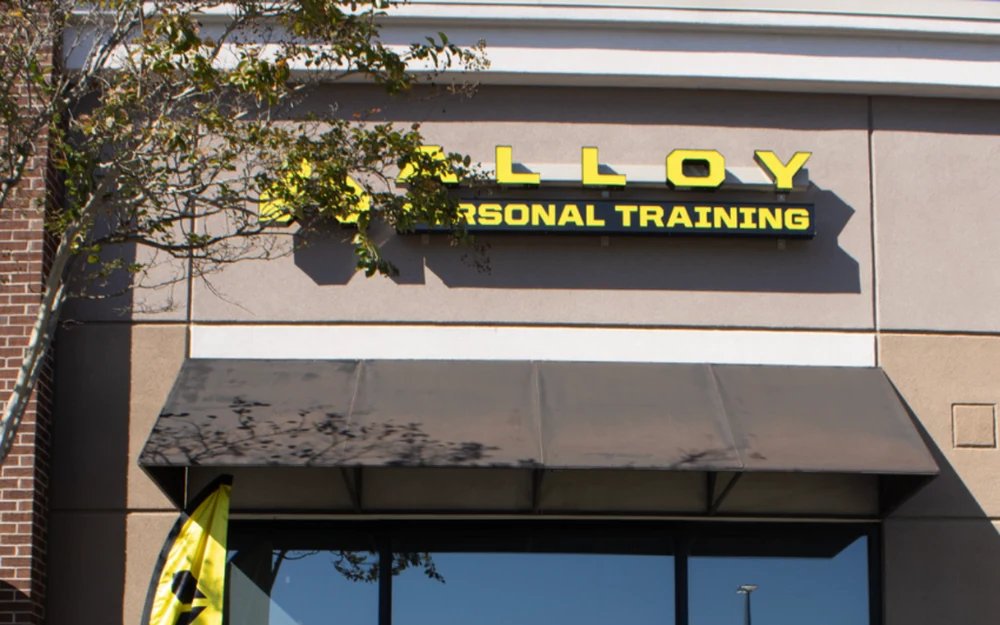
An Air Force Pilot and His Wife Just Opened a Personal Training Studio in Acworth
Alloy Personal Training's newest studio, at 3384 Cobb Pkwy NW in Acworth, had its Cobb Chamber ribbon cutting this month. It's a national small-group training franchise, but the Acworth location is owned and run by a northwest Cobb family -- here's who they are and what the studio actually offers.

Green Coyote Cantina Cuts the Ribbon on a Second Location in Avondale Estates
Green Coyote Cantina, the Tex-Mex spot that's run in East Cobb since 2022, held its official ribbon-cutting this week for a second location in Avondale Estates, in the new downtown DeKalb County has been filling in around the town's green.