This Week in Metro Atlanta: Your Fulton Tax Bill Is Not the Final Number
Fulton County mailed provisional property tax bills that are still due this month, the Atlanta Regional Commission put a 367,000-home target on the next ten years, and Gwinnett is down to about 9 percent undeveloped land. Three items, three different clocks.

Three things landed in Metro Atlanta over the past week, and all three move a number somebody is about to sign their name to. One of them has a deadline this month.
Start with Fulton County, because it is the one with a date on it. The county did not get its 2026 tax digest to the Georgia Department of Revenue on schedule, and on August 4 a Fulton Superior Court judge authorized the county to send temporary bills anyway. Those went in the mail on August 15. They are calculated on preliminary 2026 valuations paired with each jurisdiction’s 2025 millage rate. City of Atlanta taxes are due September 30. Fulton County and the other jurisdictions are due October 15.
What that means in practice is that the bill in your hand is a real bill with a real due date, but it is not the final number. Once the state certifies the digest and each jurisdiction sets its actual 2026 millage, the county recalculates, and a revised bill or a refund goes out only if the difference warrants one. Overpayments come back with interest. Underpayment does not get the same grace: interest accrues after the due date, a 5 percent penalty hits at day 120, and another 5 percent lands every 120 days after that up to a 20 percent cap. Paying the provisional bill on time is not optional just because it is provisional. And if you are closing on a Fulton property this fall, raise this with your closing attorney before the settlement statement is drafted rather than after. Tax prorations normally get cut from a known annual figure. This year the figure is a placeholder, and whoever absorbs the adjustment should be named in writing. It is one clause, and it prevents a genuinely annoying phone call in December.
The second item is regional and slower, but it is the one that tells you what gets built here for the next ten years. The Atlanta Regional Commission previewed Housing Forward 2035 on September 3 and presented it publicly the following day. It is the region’s first strategy of its kind and it covers all eleven ARC counties. The headline target is 367,000 new homes by 2035. Underneath it: the region needs roughly 117,000 new units for households earning $55,000 or less, and current trends deliver about 28,000 of them. Another 104,000 existing affordable units are considered at risk of being lost to redevelopment.
The part I find most useful is the land inventory. ARC identified about 106,000 vacant or underutilized properties across the region, including 1,530 that are publicly owned, and set a target of putting homes on 10 percent of them by 2035. ARC CEO Anna Roach framed the stakes plainly, saying that by 2035, 75 percent of people making less than $55,000 a year would not have a housing solution to speak of. Rough Draft Atlanta reported that roughly half the 367,000 units are intended to be affordable at 80 percent of area median income, which works out to about $94,000 a year for a family of four. Read that figure twice. Eighty percent of AMI in this region is not a low-income bracket. It is a teacher and a nurse. The plan goes to the ARC board for adoption in late 2026 or early 2027, so nothing here is binding yet, but documents like this are where infill zoning, parcel assembly and public-land disposition start.
Third, Gwinnett. Georgia Trend published a county profile on August 31 with a statistic worth writing down: only about 9 percent of Gwinnett’s land is still undeveloped, and the county grew about 6 percent in population between 2020 and 2025. A county that is effectively built out and still filling up has exactly one direction to go, which is why the official language has shifted to redevelopment and why the county has put $21 million into an affordable housing development fund with eleven projects finished and six more under construction. Lawrenceville alone carries more than 30 percent of the county’s affordable stock.
The demand side is arriving on schedule. UCB is building a $2 billion, 460,000-square-foot biologics plant on roughly 79 acres at Rowen, off University Parkway in eastern Gwinnett, with 330-plus permanent jobs averaging more than $72,000 a year and over 1,000 construction jobs, against about $174 million in county incentives. Construction on the Convergence Center is slated to begin this summer, and more than 1,900 acres at Rowen remain open. If you own dirt in east Gwinnett, the honest read is that you are holding a redevelopment position in a county with almost no greenfield left and a nine-figure employer walking in the door. That is a real thesis. It is also a long one. The UCB build runs roughly three years of design, three of construction and three of certification, so underwrite it on a nine-year horizon, not a two-year flip. Different bet, not a bad one.
Three next steps, in order of deadline. If you own in Fulton, pull your bill and confirm which due date applies to you — September 30 inside the City of Atlanta, October 15 everywhere else — and pay it even though the number can still change. If you are closing in Fulton this fall, settle the proration language now. And if you are weighing an east Gwinnett purchase, price it on the timeline the jobs actually arrive on. I am happy to run any of the three with you.
Sources
- Fulton County Issues Property Tax Bills — Fulton County Government, Aug 14, 2026
- Fulton County issues property tax bills amid digest delay — Alpharetta-Roswell Herald / Appen Media, Aug 2026
- ARC Previews ‘Housing Forward 2035’ — a Strategy to Address the Region’s Housing Challenges — Atlanta Regional Commission, Sept 3, 2026
- ‘Housing Forward 2035’ plan tackles Atlanta metro housing affordability crisis — Rough Draft Atlanta, Sept 7, 2026
- Gwinnett Country: Fueled for Growth — Georgia Trend, Aug 31, 2026
- Gwinnett County, Georgia announces $2 billion UCB manufacturing facility at Rowen — Gwinnett County, 2026

Metro Atlanta real estate · Licensed in Georgia & South Carolina · REAL Broker, LLC
Keep reading

Five Things Worth Doing This Halloween Weekend in Gwinnett and DeKalb
This week's two counties are Gwinnett and DeKalb: a free Dia de los Muertos festival in Norcross, trick-or-treating and a movie in Old Town Lilburn, sold-out-prone ghost tours in Lawrenceville, The Incredibles on Decatur Square, and the last three nights of Stone Mountain's Pumpkin Festival.
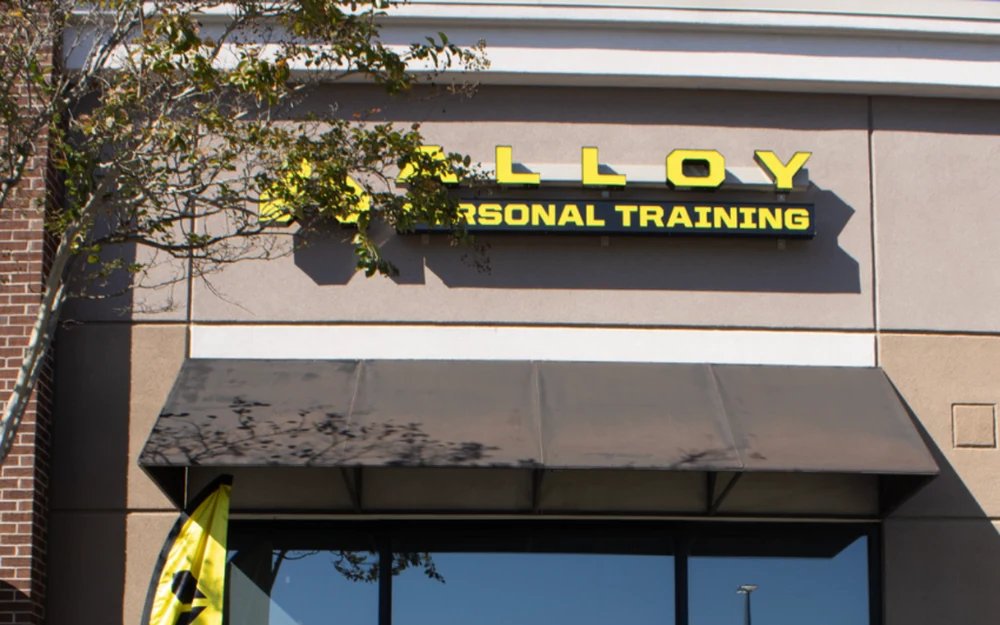
An Air Force Pilot and His Wife Just Opened a Personal Training Studio in Acworth
Alloy Personal Training's newest studio, at 3384 Cobb Pkwy NW in Acworth, had its Cobb Chamber ribbon cutting this month. It's a national small-group training franchise, but the Acworth location is owned and run by a northwest Cobb family -- here's who they are and what the studio actually offers.

Green Coyote Cantina Cuts the Ribbon on a Second Location in Avondale Estates
Green Coyote Cantina, the Tex-Mex spot that's run in East Cobb since 2022, held its official ribbon-cutting this week for a second location in Avondale Estates, in the new downtown DeKalb County has been filling in around the town's green.